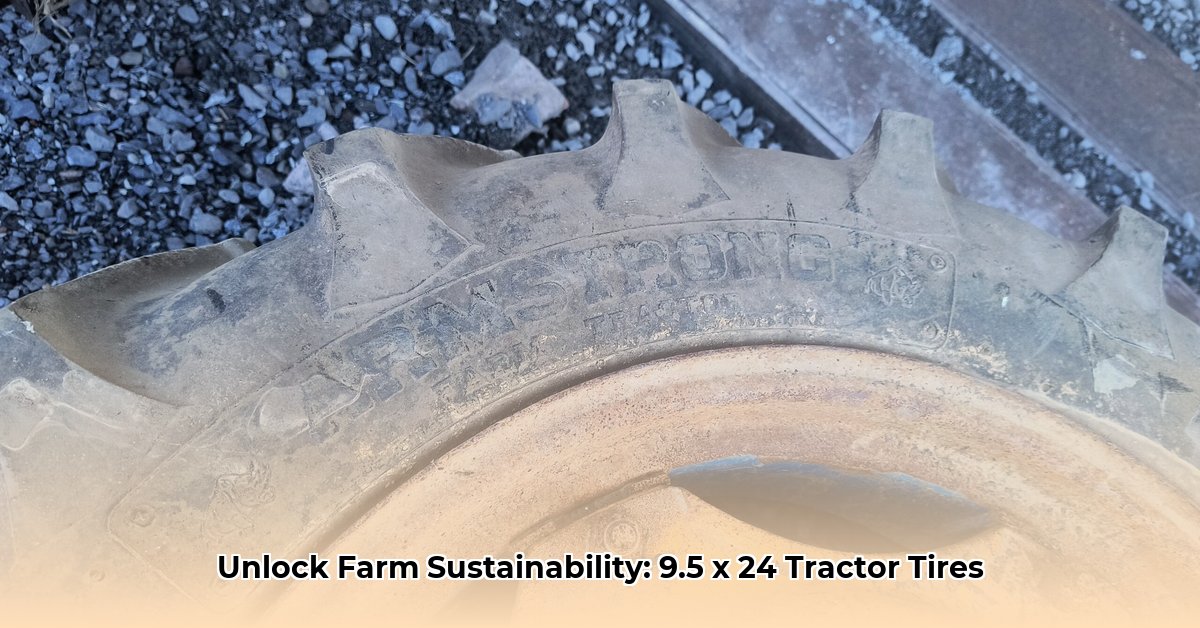
Choosing the right tractor tires significantly impacts your farm's sustainability. It affects soil health, fuel efficiency, and environmental impact. This guide focuses on 9.5 x 24 tires, offering practical advice despite limited readily available data. For information on other sizes, check out this resource on 20x8x8 tractor tires.
Understanding Your Needs: A Foundation for Sustainable Tire Selection
Before selecting a tire, understand your farm's unique characteristics. This is crucial for maximizing tire lifespan and minimizing environmental impact.
1. Soil Assessment: What type of soil do you predominantly work with? Clay soils are prone to compaction, requiring tires that minimize this. Sandy soils may necessitate deeper treads for traction. A detailed soil analysis is invaluable.
2. Operational Profile: How many hours per year does your tractor operate? What tasks does it perform? Heavy hauling demands different tire characteristics than light tillage. Quantify your workload for accurate tire selection.
3. Budgetary Considerations: Tire cost is a significant investment. Factor in both the initial price and the long-term cost, including fuel efficiency and potential replacement costs. Durability translates to fewer replacements, reducing waste and downtime.
The Carlisle Farm Specialist R-1: A Case Study
The Carlisle Farm Specialist R-1 is a commonly used 9.5 x 24 tire. While its dimensions and basic construction are known, comprehensive performance data (e.g., wear rate, traction in various soil types, fuel efficiency impact) is lacking. This data scarcity highlights a broader issue within the agricultural tire industry.
Navigating the Data Gap: A Practical Guide for Farmers
The absence of comprehensive data shouldn't hinder your decision-making. Follow these steps for informed tire selection:
1. Prioritize Independent Reviews: Seek out farmer reviews and testimonials from reputable sources. Online forums and agricultural publications can offer valuable insights beyond manufacturer claims.
2. Focus on Durability and Longevity: A durable tire minimizes replacements, thus reducing waste and saving money in the long run. Prioritize tires with robust construction and materials designed for longevity.
3. Explore Sustainable Options (Where Data Exists): While comprehensive data on sustainable tire materials is limited, investigate tires made with recycled materials or produced using environmentally friendly manufacturing processes.
The Need for Improved Data and Transparency
The current data landscape is inadequate. We need standardized testing protocols for agricultural tires to allow for objective comparisons. Manufacturers should provide more detailed and accessible performance data, including long-term studies on wear, fuel efficiency, and soil compaction. This transparency benefits farmers, researchers, and the environment.
Improved data facilitates:
- Informed purchasing decisions: Farmers can make better choices based on reliable information.
- Technological advancements: Data drives innovation in sustainable tire design and materials.
- Environmental stewardship: More efficient and durable tires reduce waste and improve soil health.
Conclusion: Long-Term Sustainability Through Informed Choices
Choosing sustainable tractor tires is a crucial step toward environmentally friendly farming. While data limitations exist, following these steps will greatly improve your decision-making process. Remember, consistent record-keeping of your tire's performance adds to the collective knowledge base, pushing the industry toward greater transparency and sustainability.